Crystal Palace Park Terraces: What Is Left of the Glass Palace
The terraces of Crystal Palace Park are the clearest sign of how grand the site once was. The park was laid out in 1854, and the palace at its center burned down in 1936. So what can you see today walking through grounds of about 200 acres? Mostly stone garden architecture that survived when the glass building did not. This article looks at three parts of the site, the terraces, the sphinxes and the park as a monument, and how they fit together.
The Italian Terraces: Upper and Lower Levels
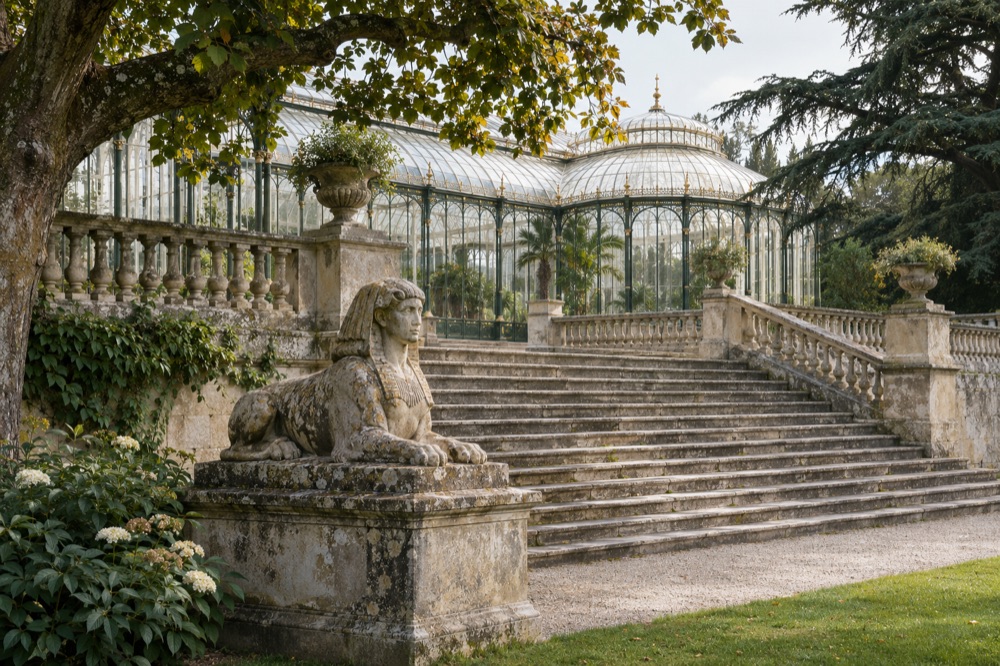
The Italian terraces rise on two levels, upper and lower, linked by steps. They go back to the creation of the park in 1854 and are listed at Grade II.
That matters because this part of the park has protected status of its own, separate from the listing of the whole site. The terraces belonged to a larger scheme in which the palace was the dominant element. With the palace gone, they strike the eye differently than they did in Victorian times. The pattern of terraces and steps is still clear, but the building they led toward is missing. For anyone curious about Victorian architecture, this is a telling case of a garden layout that outlived the building it was designed to complement.
Steps tie the two terraces together. Without them, you would have separate platforms and not one design. Climbing from the lower terrace to the upper one, you move through a layout that dates from 1854. The terraces are therefore a good place to begin understanding the whole site, since they show most clearly how the park was first planned.
The Sphinxes by the Steps: Guardians of the Former Entrance
Sphinxes sit beside these steps, and some survive in fairly good condition. Tradition says they were copied from a sphinx in the Louvre. That makes them Victorian versions of an older model and not original designs, and they reflect the taste of their time. The connection also shows how the park's designers drew on works held in the great European collections.
Historic England lists the sphinxes as Victorian sculptures that guarded the palace's former entrance. They are among the few pieces of the structure left after the fire of 1936, and they give the best hint of where visitors once walked. Knowing this changes how you see the steps: they are more than a decorative garden feature, because they once formed the way into the palace.
The sphinxes thus do two jobs in the park. You can enjoy them as sculptures, and those in fairly good condition show their form clearly. They also mark the entrance to a building that no longer exists. Together, the steps and sphinxes give a strong sense of how this part of the park worked and how visitors approached the palace.
The Park as a Monument, and Other Remains
The park as a whole is registered at Grade II*, under number 1000373 in the Historic England register, and it has been on the register since October 1, 1987. Grade II* ranks above the Grade II given to the terraces alone, and the registration covers the layout of the grounds as a whole and not only separate features. It makes sense to view this historic park as one complete design, of which the terraces and sphinxes are the most visible surviving pieces.
The remains also include the base of Brunel's south water tower. It is less famous than the sphinxes, but it fills in the picture of the former complex by showing something of its engineering. For visitors who already know the terraces and steps, it offers one more clue to the layout of the site.
The palace itself was a showpiece of cast iron and glass architecture, designed by Joseph Paxton. The structure is gone, yet its importance in architectural history is still plain. Paxton's link to the palace and Brunel's link to the surviving tower base tie today's park to the engineering of the old complex. When you look at the terraces and their Victorian architecture, remember that the park keeps only fragments of that earlier design.
What Is Worth Remembering
The terraces of Crystal Palace Park, the sphinxes and the base of Brunel's tower are now the main surviving traces of Paxton's palace. Each has its own history and protected status, and together they make up a historic park that is best appreciated once you understand what has been lost. Walking the grounds with a map of the former layout is a useful way to explore.