Crystal Palace History: From Hyde Park to Sydenham
The story of Crystal Palace is that of an exhibition hall that won itself a lasting place on the map of London. Nowadays the name usually calls to mind a district, yet it first belonged to a building of glass and cast iron in Hyde Park. How do you take a building down in one spot and put it up again in another? The answer is in its design. Below, we follow the story in three stages: the exhibition, the name and the move to Sydenham Hill.
The Great Exhibition of 1851 and Paxton's Design
The Great Exhibition took place in London's Hyde Park from May 1 to October 15, 1851. Official counts put attendance at about six million visits, a number that conveys the size of the event, and a single building stood at its heart. Joseph Paxton designed it.
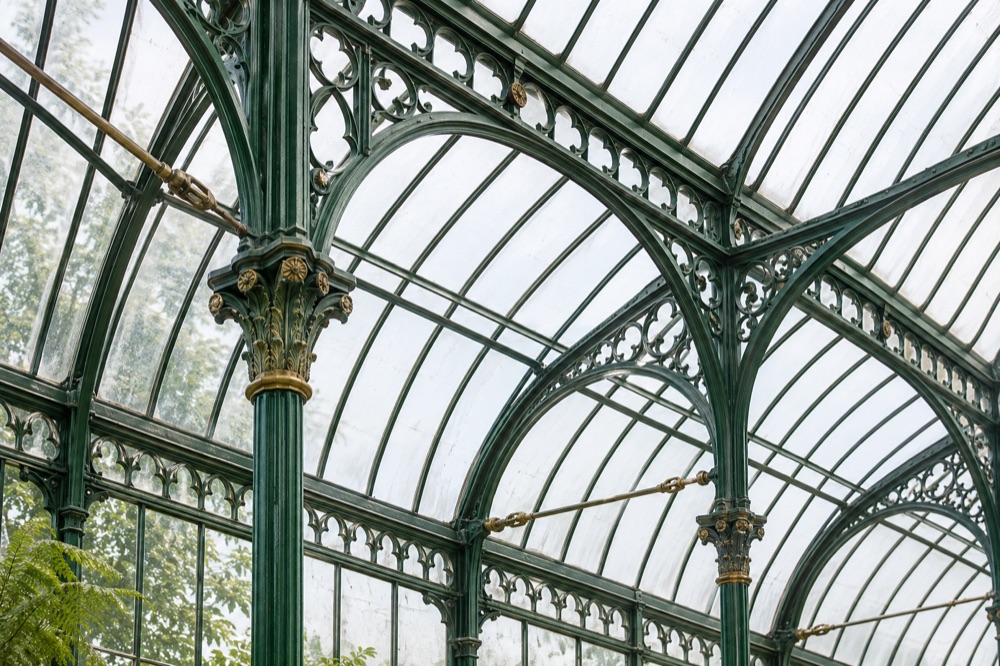
Paxton came to the job with relevant experience. He had worked as head gardener for the Duke of Devonshire at Chatsworth in Derbyshire, and the greenhouses he built there shaped his ideas for the palace. The glass hall was something like an enormous greenhouse, built for people instead of plants. This background is the first clue to how the structure came about.
Technology mattered even more. The building was made of prefabricated cast iron and glass parts, produced ahead of time and simply bolted together on site. That is why the Crystal Palace could go up in Hyde Park and later be taken apart and rebuilt somewhere else. It also settled the building's fate: the exhibition had to close, but the building did not have to close with it. Paxton's design explains almost everything that came after.
Where does the name Crystal Palace come from?
Douglas Jerrold, a writer for the satirical magazine Punch, is credited with the name. He called the building a palace of pure crystal. He meant it as a joke, but the phrase stuck so firmly to the glass hall that people began using it as its name.
Think about how far those words traveled. A sarcastic remark turned into an everyday name and outlasted the exhibition. The district would later take the name as well, as the next section explains. The story shows how one line in a magazine can decide what a place is called, and how a building's name can take on a life of its own wherever the building stands.
Where did the palace go after the exhibition?
After the exhibition closed, the building was taken apart in Hyde Park and rebuilt on the hill known as Penge Peak, beside Sydenham Hill, then a prosperous area of large villas in south London. From that height the palace could be seen across much of the southern city, which made it a landmark visible from far away. Sydenham Hill served as a natural pedestal for the glass structure.
Sources do not agree on the dates of the move. Work began in 1852 or 1853, and Queen Victoria opened the palace at Sydenham on June 10, 1854. That opening date is certain, and it gives the timeline a fixed point.
The new site meant more than the building alone. A park with fountains was laid out around the palace, and the water for the fountains was meant to come from towers designed by Isambard Kingdom Brunel. Construction of the towers started in August 1854, after the opening, so the park kept developing while the palace was already in use. That is worth knowing if you are trying to sort events into order, because the palace and its grounds were not completed at the same moment.
The name comes back at the end. The district of Crystal Palace was named for the palace on the hill at Sydenham, so an area once known for its villas became tied to a single building. In this way a temporary hall from Hyde Park left a lasting mark on London's place names, one you can still read on the map.
Summary
Three threads run through the story of Crystal Palace: Joseph Paxton's design for the Great Exhibition of 1851, the name coined by a Punch writer and the move to Sydenham Hill. Because the building was prefabricated from cast iron and glass, it could outlive the exhibition, and the hill at Sydenham gave it a new home where it could be seen from afar. The district that still carries its name is the most lasting trace of all this. Look at a map of London again: behind many names there are stories as surprising as this one.